Paint protection film degrades and fails primarily due to prolonged ultraviolet (UV) radiation exposure, aggressive high-pressure washing along vulnerable edges, harsh chemical cleaners, and inadequate surface preparation during installation. While lower-grade adhesive systems and outdated PVC materials are naturally prone to premature structural breakdown, premium aliphatic polyurethane films are engineered to avoid these specific failures. Ensuring absolute cleanliness and meticulous installation by certified professionals guarantees that the film remains completely transparent and firmly bonded to the clear coat for years.
The Primary Culprits: Material Quality vs. Installation Technique
To truly understand why a vehicle’s protective bra fails, it helps to distinguish between inferior manufacturing materials and errors made during the installation phase. Many car owners view all clear films as identical products, but the chemical and physical composition varies wildly across the automotive industry. When a film fails early in its lifespan, it is almost always a result of cheap material or a rushed installation process that compromised the adhesive’s integrity.
When choosing a low-cost, unbranded film, you are essentially applying a layer of cheap plastic over your vehicle. These low-tier films break down rapidly under environmental stress, causing the adhesive to crystallize or the top coat to turn brittle. On the flip side, even the highest-quality film in the world will fail if the installer fails to prepare the underlying paint correctly. Microscopic remnants of factory wax, transport film residue, or polishing oils will prevent the adhesive from anchoring to the clear coat, inevitably leading to edge lifting.
Comparing the Root Causes of PPF Failure
| PPF Failure Mode | Primary Root Cause | Material vs. Workmanship Issue | Preventative Solution |
| Yellowing / Discoloration | UV degradation of unstable aromatic polymers; organic contamination embedding into porous films. | Material Quality (Low-grade film) | Upgrade to modern, premium aliphatic polyurethane films. |
| Lifting at the Edges | Inadequate paint decontamination; over-stretching the film past its elastic threshold. | Workmanship (Installation error) | Precision digital plot cutting and master-level wrapped edges. |
| Peeling / Bubbling | Failed adhesive anchoring; trapped slip solution, moisture, or air pockets during the squeegee stage. | Both (Poor craftsmanship or cheap adhesive base) | Utilizing dust-free, climate-controlled installation bays and monitored curing. |
4 Core Factors That Accelerate PPF Degradation
Modern protective films are highly advanced barriers, but they are constantly subjected to severe physical and chemical abuse. Understanding the four primary environmental and mechanical stressors that destroy film will help you protect your investment over the long haul.
1. UV Radiation and Thermal Shock
The sun is the absolute greatest enemy of any automotive exterior. Constant exposure to intense ultraviolet light alters the molecular bonds of inferior chemical polymers. Over time, this radiation causes cross-linking within the plastic layers, making the film lose its elasticity. As the vehicle goes through drastic temperature shifts, moving from freezing overnight temperatures to scorching direct sunlight, the embrittled film can no longer expand and contract with the metal panels, resulting in visible cracking and yellowing.
2. Aggressive High-Pressure Washing
Pressure washers are fantastic tools for maintaining a clean car, but when operated incorrectly, they can ruin a perfect film installation in seconds. If a high-pressure water stream is held too close to an exposed seam or a pre-cut edge, the physical force can pierce beneath the film. Once water wedges under the urethane layer, it systematically shears the adhesive backing away from the clear coat, resulting in immediate lifting that spreads rapidly across the rest of the panel.
3. Harsh Chemical Exposure
Not all car wash soaps and detail sprays are safe for protective films. Utilizing harsh degreasers, aggressive bug removers formulated with heavy petroleum distillates, or highly acidic wash soaps will actively degrade the film’s delicate outer surfaces. These aggressive chemicals strip away the built-in hydrophobic top coat. Once this protective barrier is compromised, the underlying polyurethane becomes highly porous, allowing environmental pollutants, bird droppings, and exhaust soot to deeply stain the film.
4. Sub-Standard Paint Surface Preparation
A flawless, permanent bond requires a chemically pure surface. If invisible iron particles, hard water spots, industrial fall-out, or silicones remain trapped beneath the clear film during application, the pressure-sensitive adhesive cannot form a secure covalent bond with the vehicle’s paint. This lack of proper adhesion creates microscopic pathways where moisture, road salt, and air can slowly creep beneath the film, triggering bubbling and eventual peeling.
Applying Our Expertise to Solve This For Good
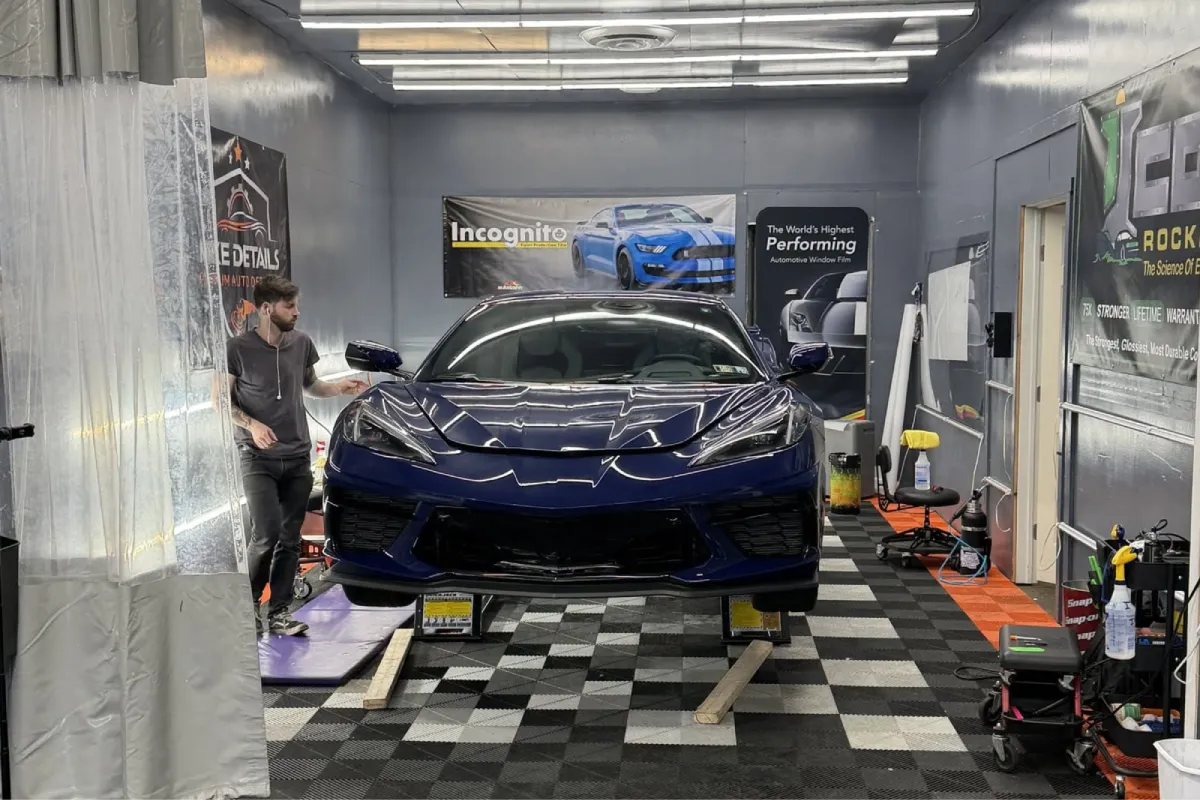
At our shop, we know that protecting a brand-new vehicle requires moving past average standards and using a master-level philosophy. We are a small team of passionate car enthusiasts who treat every customer’s vehicle as our own, giving your investment the exact same patience, care, and precision we give our personal vehicles. This absolute commitment to quality guarantees a premium experience and ensures that your vehicle’s paint is fully protected right from the start.
By prioritizing an expert installation by our certified team, we eliminate common edge failures entirely by utilizing advanced, dust-free bay protocols and meticulous edge-wrapping. We deliver invisible protection against scratches and chips that completely preserves your car’s pristine finish without any optical distortion or cloudiness. If you want a seamless fit that permanently enhances resale value, choosing our high-end Enola paint protection film services ensures that the film completely disappears into your vehicle’s unique body lines.
Leveraging our 20+ years of experience and using top-tier products for a flawless finish, we supply elite protection systems that keep your clear coat shielded from the harshest road elements. Drivers who want to keep their sports cars and daily drivers looking showroom-ready know that sourcing the best paint protection film in Enola is the ultimate way to prevent rock chips.
Debunking the Myth: “All Clear Bra Films are Created Equal and Will Eventually Yellow”
A common and lingering myth in the automotive community is that all clear bras are doomed to turn yellow, brittle, and ugly within a couple of years. This misconception stems from early-generation paint protection films manufactured in the late 1990s and early 2000s. Those early films relied on cheap polyvinyl chloride (PVC) and aromatic polyurethane compounds. Because those chemical structures are inherently unstable when exposed to sunlight, they reacted to UV light by shifting color and cracking.
Modern chemistry has completely changed the industry. Premium clear bras are manufactured using specialized, non-yellowing aliphatic polyurethane. This sophisticated material is completely UV-stable, meaning it remains chemically inert and optically clear even after years of intense sun exposure. Backed by comprehensive manufacturer warranties against discoloration, cracking, and peeling, today’s high-performance films prove that early material failures are ancient history.
Real-World Preservation Performance
The massive benefits of professional-grade film and expert application are clearly visible across our regional service areas. During a recent vehicle inspection for a client in Lemoyne, we evaluated a brand-new sports car that had been wrapped immediately after delivery. Because the surface preparation was executed flawlessly, the film showed zero signs of edge tension or adhesive bubbling, keeping the paint pristine.
We observed similar long-term performance during a comprehensive paint protection project for an SUV in New Cumberland. By applying a premium self-healing film across high-impact areas, the vehicle stayed completely safe from heavy road debris. Furthermore, while executing an inspection for a car enthusiast in Harrisburg, we confirmed that upgrading to an aliphatic polyurethane film successfully prevented the unsightly yellowing and discoloration that frequently ruins lower-grade installations.
Our team recently brought this same standard of care to a luxury sedan, executing a flawless installation of premium paint protection film in Enola, PA, to ensure long-term defense against harsh highway stone chips. These real-world results prove that investing in high-quality materials and expert installation is the single most effective way to protect your vehicle from severe environmental damage.
Lock In Flawless Exterior Preservation
Protecting your vehicle’s exterior requires absolute trust in the team handling your car. At Mike Details, our professional and approachable team of car enthusiasts is completely dedicated to providing you with an elite, premium experience. We treat every vehicle with absolute care, using only world-class products like Autobahn window tint, premium PPF, and ceramic coatings to ensure your investment is completely protected from the start. You can confidently trust our expertise to deliver the highest tier of vehicle protection and customer satisfaction.
Contact us today to request an accurate quote or schedule your appointment for high-quality paint protection film solutions, and keep your vehicle beautifully protected for the open road ahead.
People Also Ask (FAQ)
Will ceramic coatings prevent paint protection film from peeling?
A ceramic coating applied over your film will add an extra hydrophobic layer of UV and chemical protection, helping to prevent staining and fading. However, it cannot stop a film from peeling if the base installation, edge-tucking, or paint surface preparation was performed incorrectly.
Can a peeling or lifting PPF edge be fixed without replacing the entire panel?
If caught early before road dust and debris contaminate the adhesive layer, a certified technician can often trim back the lifted micro-edge and carefully re-seal the boundary. However, if dirt has already embedded under the urethane layer, the entire panel must be replaced to ensure safe, seamless protection.
How do you safely wash a car with PPF to prevent lifting?
Always maintain a safe distance of at least 12 to 18 inches between a pressure washer nozzle and the edges of the film. Never aim a high-pressure jet stream directly at a seam or a wrapped edge, and always use pH-neutral car wash soaps to preserve the film’s top coat.