Paint Protection Film protects against UV rays and acid rain by utilizing a multi-layered thermoplastic urethane barrier embedded with specialized UV inhibitors. These layers absorb harmful radiation to prevent paint oxidation while providing a chemically resistant surface that neutralizes acidic contaminants before they can etch the factory clear coat.
The Science of Solar and Chemical Defense
When you purchase a brand-new vehicle, the factory paint is at its peak vibrancy. However, the moment that the car leaves the dealership, it begins a battle against the elements. While most owners associate paint protection film in Mechanicsburg, PA, with stopping rock chips and road debris, the film’s ability to act as a chemical and radiation shield is equally critical for long-term preservation. To understand why PPF is so effective, we have to look at the material science of the film itself.
Modern PPF is a sophisticated composite designed to filter the environment. The primary layer is made of thermoplastic urethane (TPU), which is naturally flexible and tough. During a recent project for a car enthusiast in Arcona, we demonstrated how the film’s integrated UV absorbers work. These molecules are saturated throughout the urethane, catching ultraviolet rays and converting that high-energy radiation into low-level heat, which then dissipates safely. This prevents the “sunburn” effect that causes paint to fade, crack, or become brittle over time.
How PPF Neutralizes Environmental Threats
- UV Absorption: By acting as a high-SPF sunblock for your car, PPF ensures that the chemical bonds in your paint’s pigment don’t break down under constant solar exposure.
- Acid Neutralization: Acid rain and bird droppings are highly corrosive, often possessing a pH level low enough to eat through the clear coat in a matter of hours. The top coat of premium PPF features a high cross-link density, creating a non-porous surface that stops these acids from penetrating.
- Oxidation Barrier: Oxidation requires oxygen. By creating a vacuum-sealed bond over the factory finish, Mechanicsburg, PA, paint protection film ensures that oxygen never reaches the paint surface, effectively halting the “cloudy” or chalky look that plagues older vehicles.
Technical Comparison: PPF vs. Traditional Paint Protection
If you are a new car owner looking to protect your investment from the start, you’ve likely compared waxes, sealants, and coatings. While each has its merits, they differ significantly in their physical ability to withstand harsh weather and chemical attacks. When we discuss paint protection film in Mechanicsburg with our clients, we focus on the “sacrificial” nature of the product.
| Feature | Carnauba Wax | Ceramic Coating | Paint Protection Film (PPF) |
| Material Base | Natural Wax | Liquid Silicon Dioxide | Thermoplastic Urethane |
| UV Protection | Minimal (Melts in heat) | Moderate (Chemical Filter) | Maximum (Integrated Inhibitors) |
| Acid Rain Resistance | Very Low | High | Extreme (Physical Barrier) |
| Physical Thickness | < 0.1 Microns | 1–2 Microns | 150–200 Microns (8 Mils) |
| Self-Healing | No | No | Yes (Heat Activated) |
As the table shows, the sheer thickness of Mechanicsburg paint protection film provides a level of defense that liquids simply cannot match. While a ceramic coating is excellent for ease of cleaning, it is a thin layer that can eventually be compromised by concentrated acid or physical abrasion. PPF provides a dense, 8-mil cushion that absorbs the brunt of the environmental attack so your paint doesn’t have to.
Applying Our Proprietary Process to Solve This
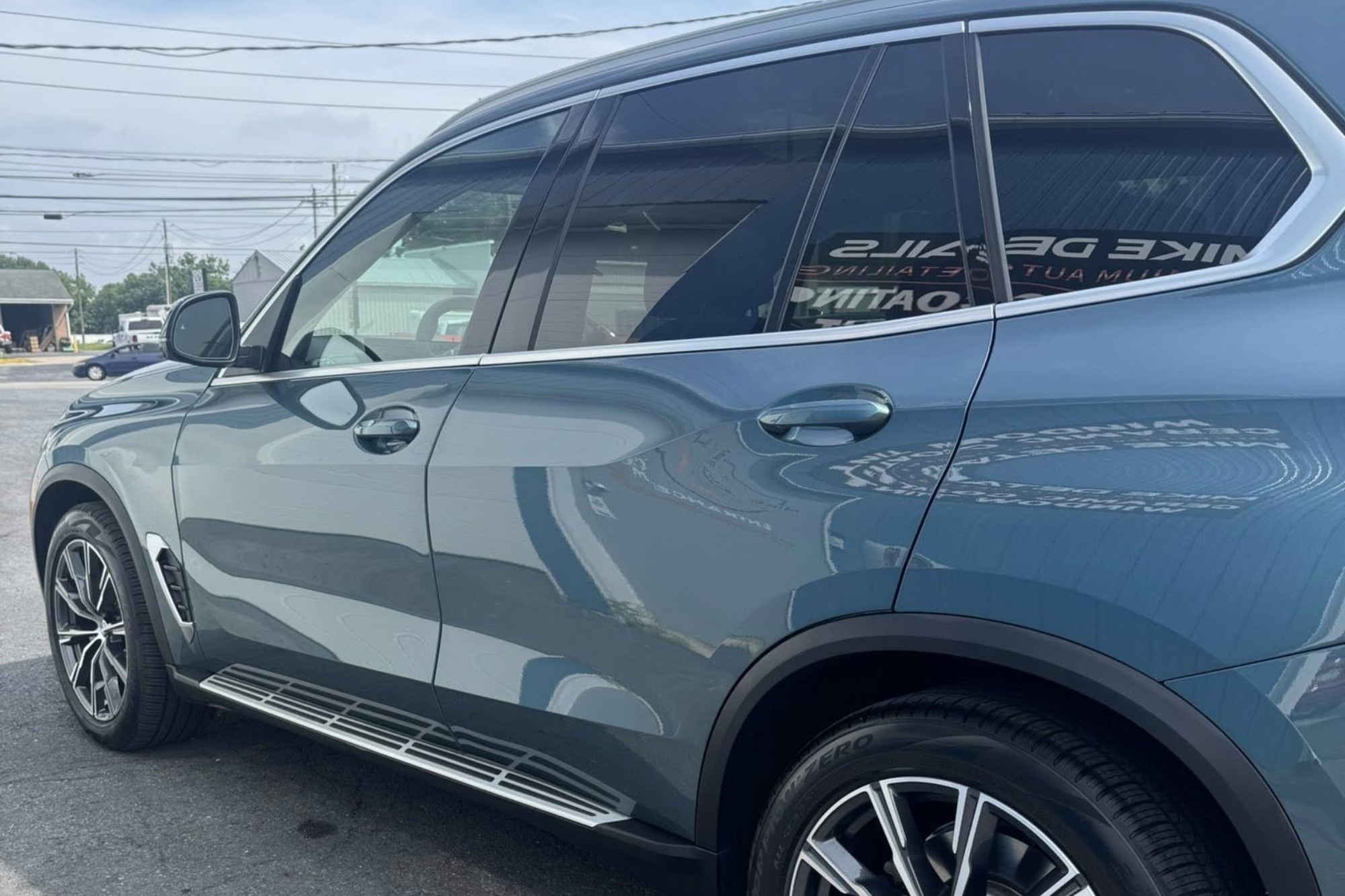
At Mike Details, we treat every vehicle as our own. We are a small team of passionate car enthusiasts, and we know that even the best film in the world, like the premium Autobahn products we use, will fail if the installation isn’t perfect. To ensure a premium experience and a flawless finish, we follow a strict internal standard.
Our Proprietary Process
Our proprietary system is a detail-focused, results-driven workflow designed to deliver consistent quality and long-lasting protection.
We follow our internal standard:
Assess. Deep Clean. Refine. Protect. Deliver.
Every vehicle receives a thorough inspection, professional-grade cleaning, careful surface refinement, and high-quality protection to ensure a clean, polished finish. What makes it proprietary is our personal touch, behind-the-scenes standards, and commitment to excellence in every detail, the difference you notice in the final result. The result: a cleaner vehicle, enhanced appearance, and detail done the right way.
During the Assess phase, we look for any existing signs of acid etching or UV damage. We then move into the Deep Clean and Refine stages, which are the most critical. If acid rain residue or microscopic minerals are left on the paint, they are essentially “laminated” into the car when the film is applied. By refining the surface first, we ensure the bond is absolute. Once we protect the car with the film and deliver it back to you, you can drive with the confidence that your investment is vacuum-sealed against the elements.
Debunking the “PPF Will Turn Yellow From the Sun” Myth
One of the most common concerns we hear from owners in Trindle Spring is that the film will eventually turn yellow and ruin the look of their car. This myth is rooted in the performance of “first-generation” films from the early 2000s.
This is a significant misconception. Modern, professional-grade PPF is “aliphatic,” meaning its chemical structure is inherently stable and resistant to UV-induced discoloration. Older “aromatic” films would react with sunlight, causing a yellow tint to develop over time. Today’s technology, particularly the premium Autobahn and Icon Rocklear products we prioritize, utilizes advanced polymers and UV stabilizers that remain optically clear for a decade or more. If you see a car with yellowed film today, it is likely an outdated product or a budget-tier “off-brand” film that lacks the high-end chemistry found in professional paint protection film installations.
The Top 4 Environmental Benefits of PPF
- Prevents Clear Coat Failure: The sun can be surprisingly intense. PPF stops the “delamination” or peeling effect that occurs when a clear coat is literally cooked by UV rays.
- Eliminates Water Spot Etching: When mineral-heavy rain dries on a hot car, it can “crater” the paint. The hydrophobic topcoat of the film causes this water to bead and roll off before it can dry.
- Preserves Resale Value: A car with a vibrant, deep color will always sell for more than one with faded, chalky panels. PPF keeps that factory depth for the life of the vehicle.
- Reduces Maintenance Intensity: Because contaminants like bird droppings and tree sap cannot bond to the film, they wash away during a standard maintenance wash with minimal effort.
Why Expert Installation Matters
At Mike Details, we understand that your vehicle is more than just transportation; it’s an investment in your lifestyle. Our goal is to make you feel confident and assured that your car is in the hands of professionals who take true pride in their craft. We don’t believe in rushed detailing or price-only services; we focus on delivering quality that lasts.
What sets us apart is our personalized service. Because we are a small team, we can focus on the minute details, the tucked edges, the hidden seams, and the surgical cleanliness that larger, high-volume shops often overlook. Whether it’s paint protection film or a high-end ceramic coating, we use the same premium products we would put on our own cars. We want you to feel the “Mike Details” difference the moment you see your car in the sunlight.
Protect Your Investment Today
The best time to protect your car was the day it rolled off the assembly line; the second-best time is today. Don’t let the next acid rainstorm or a summer of UV exposure steal the value of your vehicle. Our team is ready to provide you with a premium experience and the best protection available in the industry.
Contact us today to schedule an appointment or request a quote for your paint protection film installation. Let’s work together to keep your vehicle looking showroom-ready for years to come.
People Also Ask (FAQ)
1. Does PPF really stop acid rain from etching?
Yes. Unlike a wax that can be stripped by strong acids, paint protection film is a physical barrier. The acid spends its energy trying to break down the resilient urethane rather than your delicate clear coat.
2. Can I apply ceramic coating over my PPF?
Absolutely. In fact, we often recommend this “dual-layer” approach. The PPF provides the physical and UV protection, while the ceramic coating adds extreme water-beading and ease of maintenance.
3. How long does the film stay clear?
When you choose premium products and professional paint protection film, you can expect the film to stay optically clear for 10 years or more. Our films are backed by manufacturer warranties against yellowing and cracking.
4. Is the film visible on the car?
When installed by enthusiasts who care about the craft, PPF is nearly invisible. We use custom-cut patterns and tuck edges whenever possible so that the only thing people notice is the deep shine of your paint.
5. How do I maintain the film after it’s installed?
Maintenance is simple: wash your car regularly with a pH-neutral soap. Because the film is non-porous, dirt and environmental contaminants won’t “stick” like they do to bare paint, making your weekly wash much faster.