Applying a ceramic coating without proper paint prep seals in existing swirls, scratches, and oxidation permanently beneath a hardened glass-like shell. Because the chemical formula cannot bond with a contaminated clear coat, the coating will suffer premature structural failure, peeling away within months instead of lasting years. Skipping the prep work ultimately wastes the product and leaves your vehicle’s paint looking hazy and unprotected.
Technical Specifications and Key Features of the Paint Decontamination Process
To achieve an optimal, long-lasting liquid armor bond, automotive surfaces must undergo a multi-stage decontamination sequence. Professional paint correction technicians analyze the clear coat matrix using several key preparation features:
- Chemical Decontamination (Iron Removers): This step uses pH-neutral, acid-reactive compounds to target and dissolve microscopic metallic particles embedded deep inside clear coat pores from brake dust and industrial fallout.
- Mechanical Decontamination (Clay Treatment): A process where specialized detailing clay blocks shear away stubborn, above-surface contaminants like tree sap, overspray, and road tar that washing leaves behind.
- Subsurface Paint Correction: Using mechanical dual-action polishers combined with micro-abrasive compounds to safely level down micro-scratches, spiderweb swirls, and hazy oxidation, restoring a mirror-like finish.
- Isopropyl Alcohol (IPA) Wipe Down: A critical final cleaning stage that completely strips away lingering polishing oils, fillers, lubricants, and old waxes, leaving behind a bare polyurethane paint layer ready for molecular bonding.
The Four Phases of Mechanical Coating Failure on Unprepared Surfaces
When an installer bypasses structural cleaning guidelines, the fluid dynamics of the liquid polymer matrix are deeply compromised. Over a short period of regular driving, the protective layer breaks down through a distinct, multi-step failure sequence.
- The Trapped Particulate Barrier: The Separation Phase.
Microscopic oils, old wax residues, and environmental traffic films form an unlevelled separation layer directly on top of the factory clear coat.
- Chemical Bonding Deficit: The Application Phase.
The liquid ceramic polymer is applied but cannot reach the open paint pores. Instead of cross-linking with the clear coat, the coating attaches loosely to the unstable surface dirt and oils.
- Micro-Fissure Development: The Weathering Phase.
As the vehicle sits under daily temperature changes, the metal body panels expand and contract. Because the loosely bonded ceramic shell cannot move uniformly with the paint, it develops microscopic fractures and weak spots.
- Premature Delamination: The Breakdown Phase.
During routine hand-washing or rainstorms, high-pressure water and car wash shampoo molecules force their way into the micro-fissures. This undermines the weak layer, causing the unbonded ceramic shell to flake and peel away entirely.
Structural Comparison Matrix: Prepped vs. Unprepped Applications
The variance between a fully decontaminated paint surface and a neglected clear coat directly dictates the visual beauty and physical lifespan of the product.
| Performance Indicator | Fully Prepped Clear Coat Surface | Unprepped / Dirty Clear Coat Surface |
| Chemical Bond Integrity | Maximum, uniform covalent bonding across the entire polyurethane surface | Weak, uneven mechanical adhesion to loose surface oils and contaminants |
| Expected Longevity Index | 100% Lifetime Performance; lasts for several years based on formula specifications | Rapid failure; usually washes away or breaks down within 3 to 6 months |
| Visual Depth and Clarity | Flawless; brilliant depth with no underlying paint defects or scratch haziness | Dull and trapped; permanently seals in light swirls, scratches, and water spots |
| Hydrophobic Contact Angle | High: water droplets form a steep sphere greater than 110° for quick sheeting | Low, flat water collection due to surface debris interrupting the bead flow |
Debunking the Myth: “Ceramic Coatings Work Like Heavy Fillers to Hide Swirl Marks and Paint Defects”
A very common and persistent myth in the detailing community is that a ceramic coating behaves exactly like a thick, heavy glaze or a traditional carnauba paste wax, meaning it will fill in and easily mask pre-existing scratches, micro-swirls, and spiderweb paint defects. Many car owners believe that because the coating is a liquid glass polymer, it will simply flow into the scratches, level them out, and cure into a perfectly smooth reflection without needing any machine polishing.
In reality, ceramic coatings are completely optically transparent and incredibly thin, measuring just a fraction of a single micron thick. Rather than hiding or masking defects, a premium coating acts exactly like a magnifying glass. It hardens into a tight glass shell that sharpens and highlights whatever is underneath it. If your clear coat is covered in heavy wash scratches, paint hazing, or trail marks from automated car wash brushes, applying directly over them will lock those flaws in place, making them stand out much more prominently under direct sunlight.
Applying Our Advanced Surface Protection Systems to Solve This
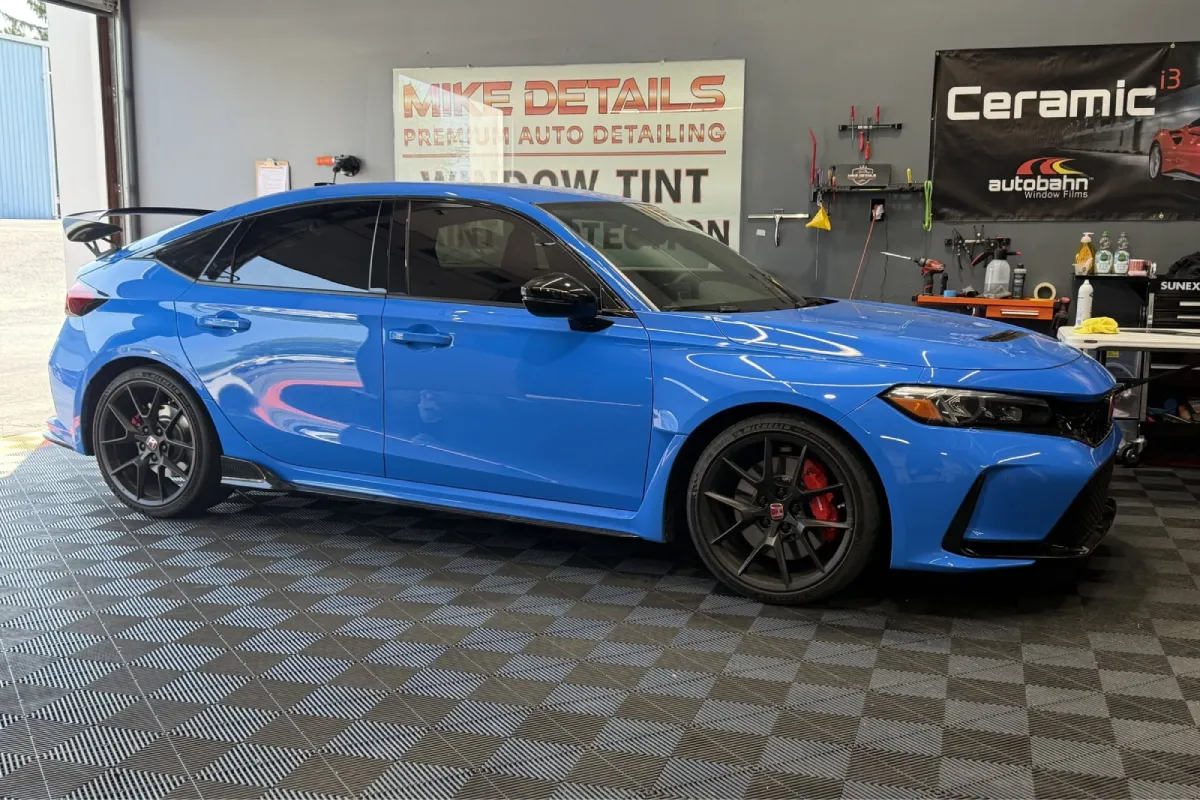
Keeping your vehicle pristine after exposure to harsh road grime requires specialized materials, steady technical training, and an obsession for perfection. At Mike Details, we are a small team of passionate professionals who treat your car like our own, delivering consistent quality, clear expectations, and full transparency. Backed by 20+ years of experience, we provide craftsmanship you can trust, combining premium products, proven results, and passion in every detail to protect your investment from day one.
By using top-tier products for a flawless finish, including trusted systems like Autobahn and Icon Rocklear, we deliver superior gloss and hydrophobic properties while providing ultimate protection from environmental Contaminants. This advanced approach makes your vehicle easier to clean, preserves its pristine appearance, and ensures protection built to last. We never take shortcuts during surface preparation, giving you lasting confidence and complete peace of mind with every detail.
Regional Climate Stresses and Local Paint Preservation Realities
Vehicles throughout Central Pennsylvania face year-round environmental hazards that gradually wear down factory paint. Road salt and chemical brines during winter, followed by tree sap, industrial fallout, bird droppings, and heavy pollen in warmer months, can all damage the clear coat if left untreated. When these contaminants become trapped beneath a protective layer without proper preparation, they may cause permanent staining, etching, and reduced coating performance.
Choosing a professional ceramic coating in Enola, PA ensures your vehicle undergoes a complete decontamination process before any protection is applied. This includes removing embedded iron particles, road grime, and other contaminants, followed by a thorough inspection to verify the paint is ready for long-term protection. Proper preparation creates the ideal surface for the coating to bond, maximizing both durability and appearance.
At Mike Details, every Enola, PA ceramic coating service is built around meticulous paint preparation and attention to detail. Our team carefully washes, decontaminates, and refines each panel to create a smooth, defect-free surface that enhances gloss while helping protect against UV rays, oxidation, chemical contaminants, and everyday road debris. This disciplined approach also makes routine washing easier and helps your vehicle maintain its freshly detailed appearance.
Whether you drive daily through changing weather or simply want to preserve a prized vehicle, investing in an Enola ceramic coating provides lasting protection and long-term value. With expert preparation, premium products, and proven craftsmanship, your vehicle is better equipped to withstand the region’s demanding conditions while maintaining a deep, reflective finish for years to come.
Trust Your Car with Passionate Detailing Experts
Allowing embedded iron particles, stubborn tree sap, and light swirl marks to be trapped beneath a hardened protective shell ruins the visual depth of your vehicle and leads to rapid product failure. At Mike Details, true durability, an intense showroom shine, and easy wash maintenance are earned through meticulous paint preparation, expert craftsmanship, and careful attention to every stage of the detailing process.
Give your vehicle the premium protection and immaculate finish it deserves right from the start. Contact us today. Whether you are looking for advanced Autobahn paint protection film, professional window tinting, or a flawless ceramic installation, reach out to us to share your passion for cars and start a conversation about protecting your valuable investment.
People Also Ask
Can you fix a ceramic coating that was applied over scratched or un-prepped paint?
Yes, but it requires completely removing the failed or flawed coating. Because a cured ceramic coating forms a semi-permanent chemical bond with the paint, it cannot simply be wiped off with solvents. It must be safely machine-polished away using specialized micro-abrasive pads and compounds to bare the raw clear coat, allowing for proper paint correction and reapplication.
Is a dual-action machine polish always necessary for a brand-new car?
Yes, a light machine polish is highly recommended even for a brand-new vehicle straight from the dealership lot. During transport on open trains and transport trucks, new cars accumulate industrial rail dust, iron filings, and transport wrap residue. Dealership detailers also frequently use cheap fill-in waxes that cover up surface scratches, which must be fully polished away to allow a ceramic coating to bond properly.
How do you tell if a ceramic coating has completely failed or delaminated?
You can easily identify coating failure by watching how water behaves on a freshly washed vehicle panel. If water sheets flat across the surface and pools up instead of forming tall, tight beads that quickly slide off the panel, the coating has either completely failed or is heavily clogged with road film. If a deep decontamination wash does not bring back the beading, the coating has delaminated.